Selling digital products to European customers comes with a tax obligation that many sellers discover too late: EU VAT. Unlike physical goods, where VAT rules are tied to shipping and customs, digital products have their own set of rules — and they apply regardless of where your business is based.
What Counts as a “Digital Product”?
The EU defines electronically supplied services (ESS) broadly. If your product is delivered over the internet and doesn’t require significant human involvement, it’s a digital product for VAT purposes.
The €10,000 Threshold
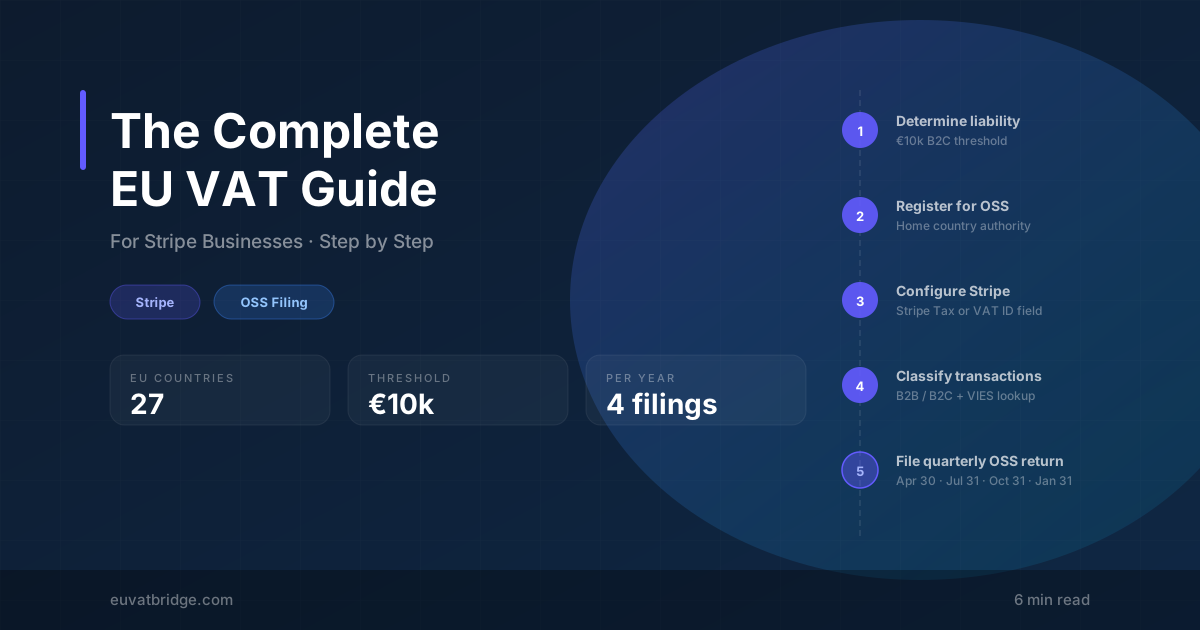
You need to register for EU VAT (via the OSS scheme) when your total B2C digital product sales to EU consumers in other member states exceed €10,000 in a calendar year.
Customer Location: The Two-Piece Evidence Rule
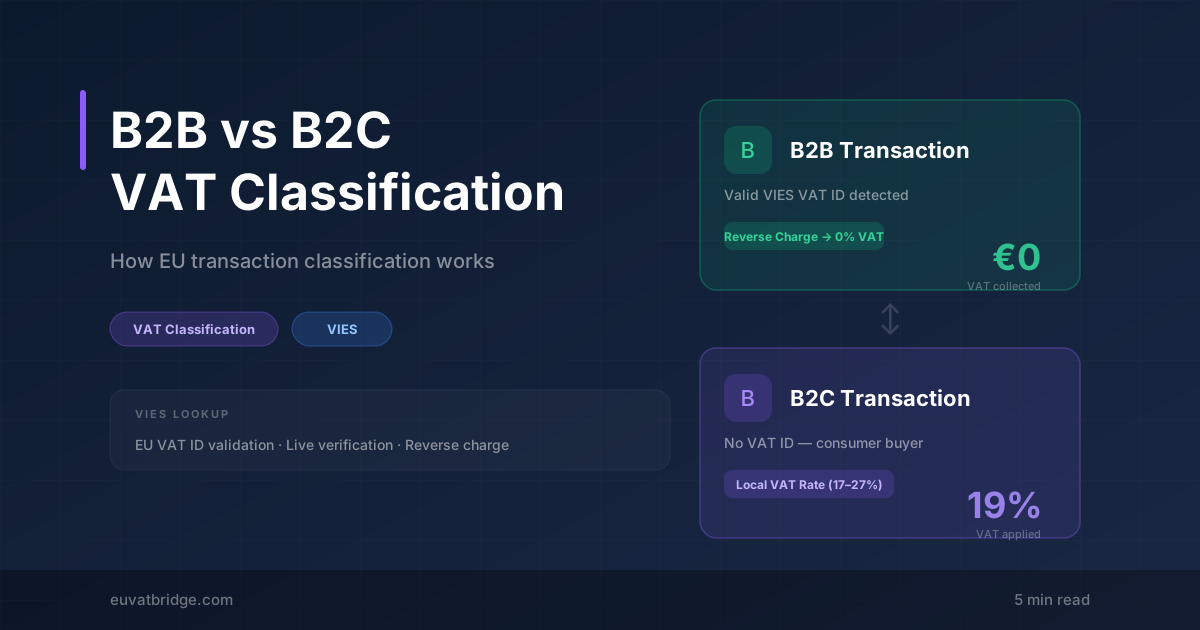
For digital products, VAT is charged based on where the customer is located, not where you are. The EU requires you to collect two non-contradictory pieces of evidence:
In practice, most digital sellers use billing address + card country. Payment processors like Stripe provide both, which satisfies the requirement.
VAT Rates by Country (2026)
Some countries have reduced rates for specific digital products (e.g., e-books), but the standard rate applies to most SaaS and digital services.
Registration Steps
For EU-Based Sellers
- Log into your home country’s tax authority portal — e.g., Revenue Online Service in Ireland.
- Apply for the Union OSS scheme — provide your VAT number and business details.
- Wait for confirmation — typically 1–2 weeks.
- Start charging local VAT rates — for each customer’s country.
For Non-EU Sellers
- Choose an EU member state — Ireland and Netherlands are common choices for English-language support.
- Apply for Non-Union OSS — provide company details, service description, and bank info.
- Wait for approval — typically 2–4 weeks.
- Begin charging and collecting VAT — on all EU B2C sales.
The Quarterly Filing Process
Each filing requires a country-by-country breakdown of B2C revenue (net of VAT), VAT rate applied per country, total VAT collected per country, all amounts in euros. You file through a single portal and make a single payment — the tax authority distributes VAT to each member state.
Record-Keeping Requirements
If you started selling to EU customers in 2024, you need to keep those records until at least 2034. Tax authorities can audit any period within that window.
Getting Started Without Overwhelm
Key takeaway
vidaReady simplifies this entire process by connecting to your payment processor, automatically classifying every EU transaction with VIES validation, and generating the quarterly OSS report in the format your tax authority needs. Whether you’re catching up on past quarters or setting up compliant filing going forward, having the classification and reporting automated removes the most time-consuming parts of EU VAT compliance.