When it comes to EU VAT compliance, Stripe users typically choose one of three approaches: manual spreadsheet reporting, Stripe Tax, or a dedicated VAT reporting tool. Each has different trade-offs in cost, accuracy, and time investment. Let’s break down all three so you can make the right call for your business.
Approach 1: Manual VAT Reporting
The DIY approach: export your Stripe data, classify transactions in a spreadsheet, validate VAT IDs by hand, and build your OSS report manually.
- Export transactions — Download CSV from Stripe each quarter.
- Filter to EU-only — Keep only transactions by billing country.
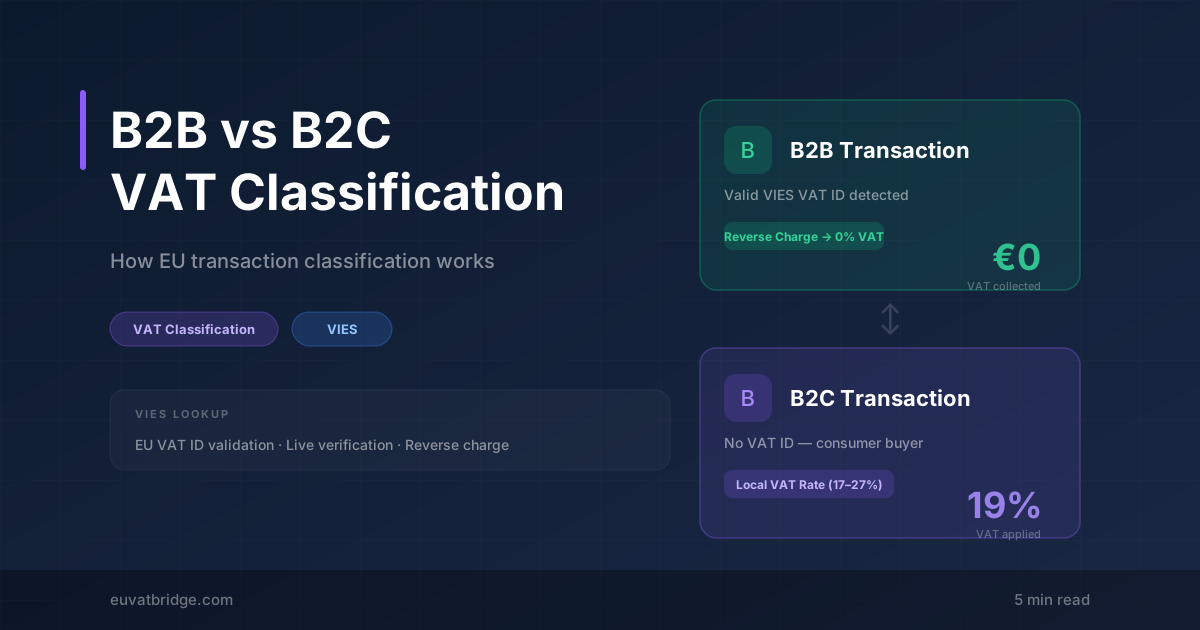
- Validate VAT IDs — Look up each one on the VIES website manually.
- Mark B2B/B2C — Valid VAT ID = B2B, else B2C.
- Apply VAT rates — Correct rate for each B2C transaction’s country.
- Convert to EUR — Use appropriate exchange rates.
- Aggregate by country — Produce the OSS report.
Best for: Very early-stage businesses with fewer than 50 EU transactions per quarter and limited budget.
Approach 2: Stripe Tax
Stripe’s built-in tax product that calculates and collects the correct tax amount at checkout.
- Enable Stripe Tax — Configure in your Stripe dashboard.
- Set up tax codes — Configure product tax codes and business address.
- Automatic calculation — Stripe adds the correct VAT at checkout.
- Collect VAT IDs — Built into the checkout flow.
- View summaries — Tax summaries available in dashboard.
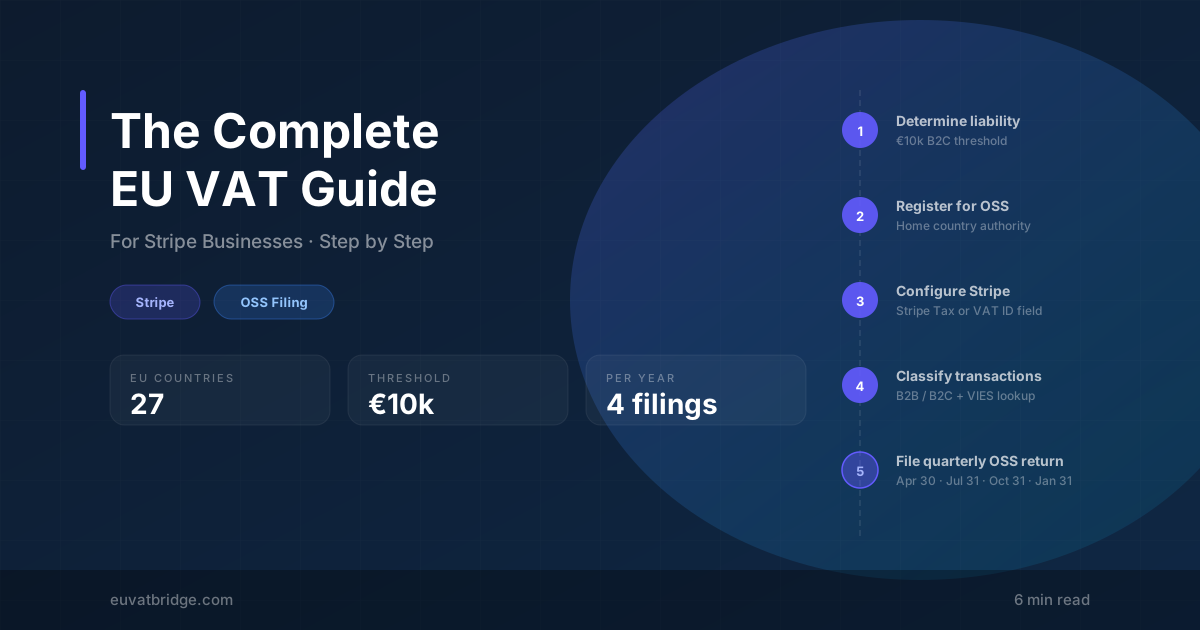
- File manually — You still need to file your OSS return using Stripe’s summary data.
Cost at Scale
Stripe Tax’s 0.5% fee compounds quickly:
Best for: Businesses using Stripe Checkout that want automatic VAT calculation at point of sale and are willing to pay the per-transaction fee. Best at lower revenue volumes.
Approach 3: Dedicated VAT Reporting Tool
A purpose-built tool that connects to your Stripe account and handles classification, validation, and report generation.
- Connect Stripe — Via API key, pulls data automatically.
- Automatic classification — Every EU transaction classified with live VIES validation.
- VAT rates applied — Per country, amounts converted to EUR.
- Download OSS report — Ready-to-file format.
Best for: Businesses with meaningful EU revenue that need accurate OSS reports without hours of manual work or percentage-based fees.
Comparison Table
| Feature | Manual | Stripe Tax | Dedicated Tool |
|---|---|---|---|
| VAT collection at checkout | No | Yes | No |
| B2B/B2C classification | Manual | Partial | Automatic |
| VIES validation | Manual lookups | At checkout only | Full, with audit trail |
| OSS report generation | Manual (spreadsheet) | No | Yes |
| Historical data processing | Yes (manual effort) | No | Yes |
| Cost model | Free (your time) | 0.5% per transaction | Flat fee |
| Time per quarter | 4–12 hours | 1–2 hours (manual filing) | Minutes |
| Scales with revenue | Poorly | Cost scales linearly | Well |
The Practical Recommendation
The optimal setup for most SaaS businesses
Combine two approaches: use Stripe Tax (or a custom implementation) for VAT collection at checkout, and a dedicated tool for VAT reporting and filing. This gives you correct VAT collection on the front end and compliant reporting on the back end, without paying percentage-based fees for report generation that Stripe Tax doesn’t even provide.
vidaReady is built for the reporting side: connect your Stripe account, get every transaction classified with VIES validation, and download your OSS report ready to file. It works whether or not you use Stripe Tax for collection, and flat pricing means your cost doesn’t grow as your revenue scales.