If you’re using Stripe to collect payments from European customers, the EU One Stop Shop (OSS) scheme directly affects you — whether you’re based in the EU or not. It’s the tax framework every digital-goods seller into the EU must understand.
What is OSS?
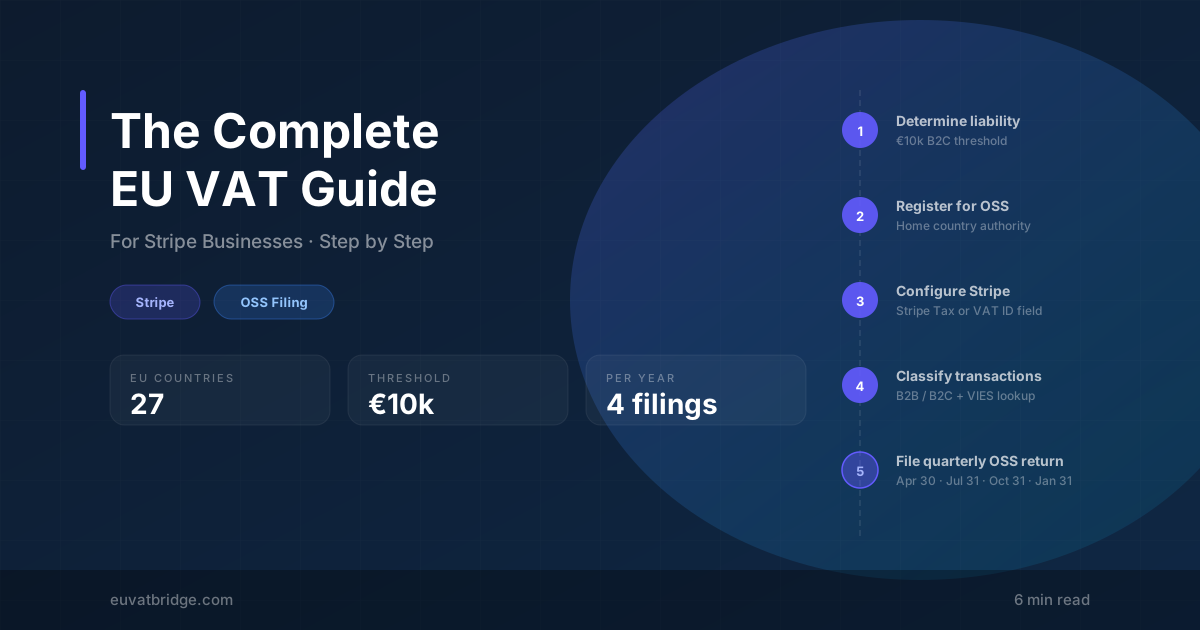
OSS replaced the old MOSS (Mini One Stop Shop) system in July 2021. The big idea? Instead of registering for VAT separately in each country where you have customers, OSS lets you file a single quarterly return covering all 27 EU member states.
Who needs to comply?
You need to register and file under OSS if all three of these are true:
- You sell digital services or goods to end consumers — this is B2C, not B2B.
- You have customers in EU countries other than your own — cross-border sales trigger OSS.
- Your total cross-border EU B2C sales exceed €10,000 per year — cumulative across all EU countries.
“Digital services” covers a surprisingly wide range:
Filing deadlines
OSS returns are filed quarterly. Miss one, and you’re looking at interest charges — potentially from multiple EU authorities at once.
What happens if you ignore it?
Non-compliance carries real consequences. EU tax authorities share data, and Stripe already reports transaction data to certain jurisdictions.
For a bootstrapped SaaS doing €100k/year in EU revenue, a two-year audit can result in a €15–25k+ bill.
The classification problem
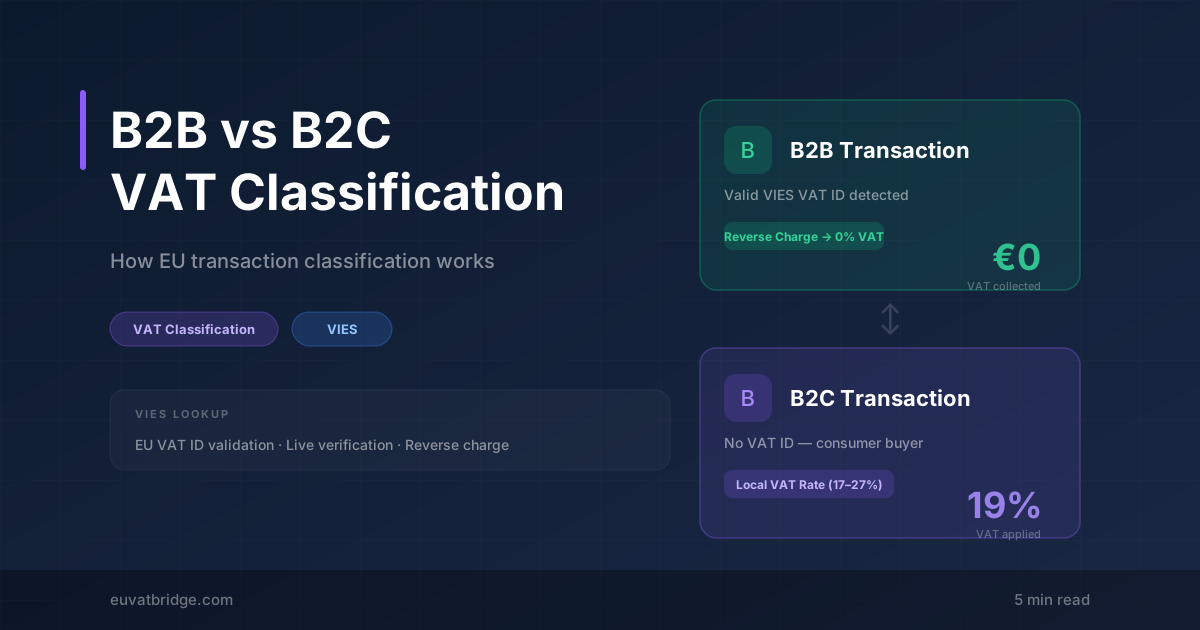
OSS doesn’t just require you to report total EU revenue. For each transaction you need to do all of the following:
- Identify the customer’s country — not just their billing address.
- Classify as B2B or B2C — zero VAT via reverse charge, or full local VAT rate.
- Validate VAT IDs — check against the official VIES registry.
- Apply the correct rate — each of the 27 countries has its own.
The automated solution
Key takeaway
vidaReady connects to your Stripe account, classifies every transaction automatically (B2B / B2C / Reverse Charge) with live VIES validation, and generates an OSS-ready CSV broken down by country — in minutes, not hours.