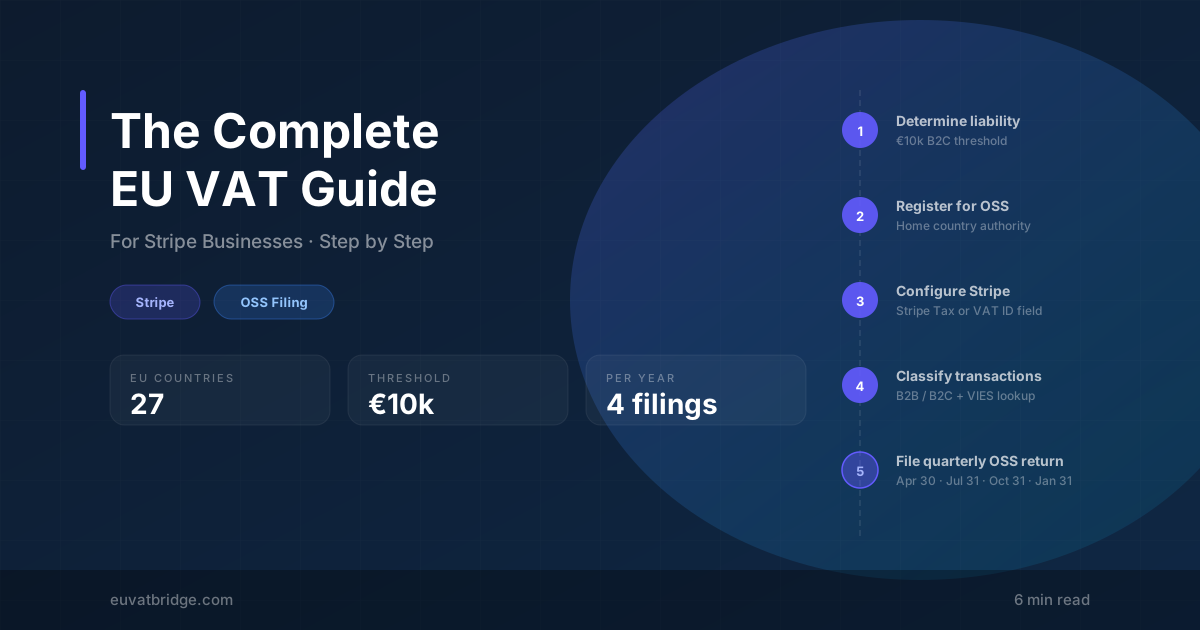
In March 2025, the EU formally adopted the VAT in the Digital Age (ViDA) package — the biggest overhaul of EU VAT rules since OSS launched in 2021. If you run a digital business collecting EU payments via Stripe, ViDA directly affects you starting in 2026.
What is ViDA?
ViDA is a three-pillar regulatory package that fundamentally changes how EU VAT is enforced:
The Digital Reporting Requirements (DRR) mean businesses must submit structured transaction data alongside VAT returns. Platform Economy Rules make payment processors like Stripe responsible for VAT collection in certain scenarios. And the Single Registration pillar expands OSS to eliminate country-by-country registrations for most cross-border transactions.
What changes in 2026?
Starting 2026, tax authorities across all 27 EU member states can match your Stripe payment data against your OSS return in real time. Here’s what that means in practice:
- Your OSS return must be structured at the transaction level, not just country-level aggregates
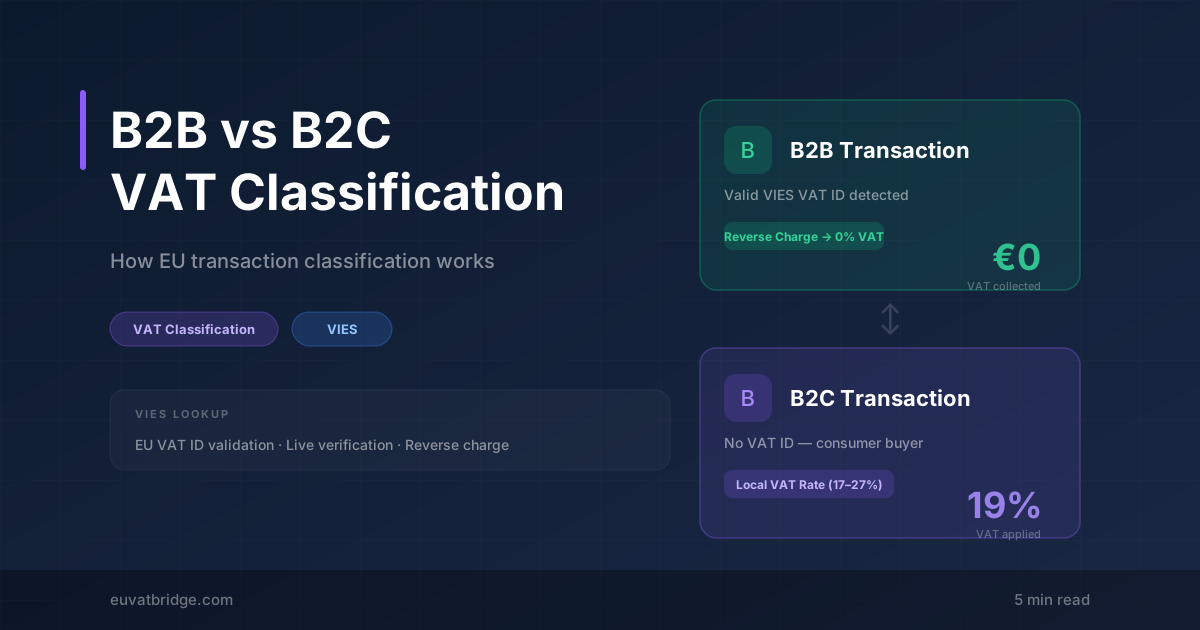
- Every B2B reverse-charge transaction must include a VIES-verified VAT ID — format-only validation is no longer sufficient
Under ViDA, filing an approximate OSS return isn’t just a compliance failure — it creates an automatic discrepancy that tax authorities will investigate.
Why this invalidates “good enough” filings
Before ViDA, many businesses filed country-level aggregates without transaction-level detail. That approach now carries serious risk.
What “ViDA-ready” means in practice
A ViDA-compliant report needs to include, for every EU transaction:
- Transaction date and amount — in the customer’s currency, converted to EUR.
- Customer country — verified, not self-reported.
- Classification — B2B, B2C, or Reverse Charge.
- For B2B: VIES-validated VAT ID — with validation timestamp.
- VAT rate applied and VAT amount collected — per-transaction detail.
How vidaReady prepares you for ViDA
You’re already ViDA-ready with vidaReady
Every transaction classified individually (not just aggregated). VAT IDs validated against the live VIES API with result logging. Country-level breakdowns match Stripe’s transaction-level data exactly. Reports exportable in formats accepted by all EU OSS portals. 10-year audit trail maintained automatically.